If you have been in the AV industry for a while, you know that display technology keeps changing. We saw LCD take over from plasma, then LED became the standard, and now there’s OLED in premium applications. But in the last few years, another term is appearing in trade shows, press releases, and product roadmaps — MicroLED. And the way it’s going, this is not just another buzzword. It’s very likely to become the main choice for high-end commercial displays in the next decade.
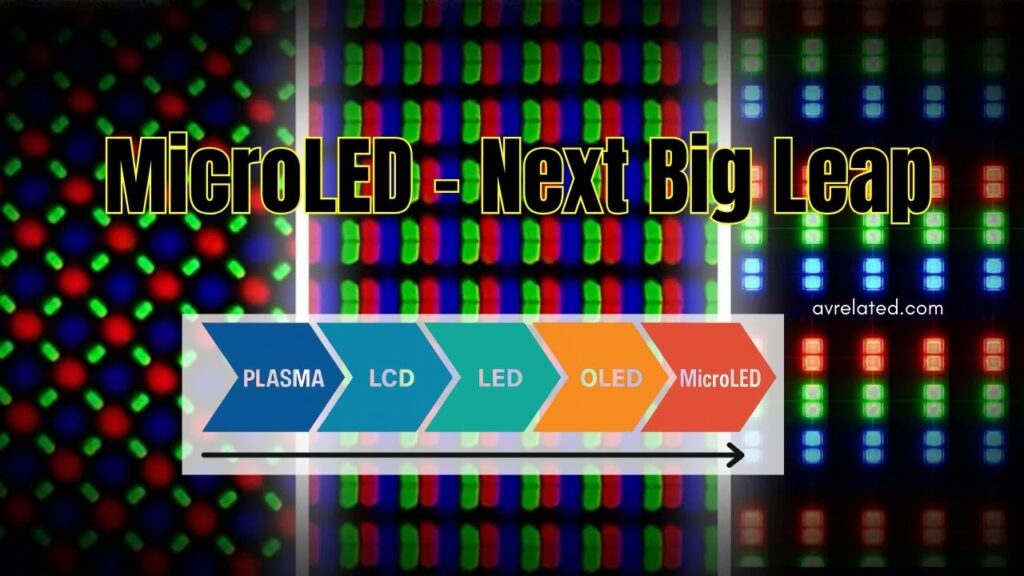
Let me explain why in simple terms. A normal LED display uses clusters of red, green, and blue LEDs to create each pixel. These LEDs are usually bigger and sometimes share light diffusers. MicroLED, as the name suggests, uses extremely small LEDs — tiny enough to be placed directly as individual pixels without the need for a backlight or color filters. Each pixel is its own light source. That means higher brightness, deeper blacks, better contrast, and longer lifespan.
Now, if you compare it to OLED, both can switch pixels completely off to achieve perfect black levels. But OLED uses organic materials that degrade faster, especially at high brightness, which is a big issue in commercial installations running 12–16 hours a day. MicroLED uses inorganic materials, so it doesn’t burn in, doesn’t fade as quickly, and can handle extreme brightness without losing performance. That’s a huge selling point for AV projects in retail, control rooms, and outdoor signage.
The interesting part is how the industry roadmap is shaping up. Today, MicroLED is still expensive and mostly used for very high-end applications — think Samsung’s “The Wall”, Sony’s Crystal LED, or fine-pitch MicroLED video walls for luxury stores and premium corporate lobbies. The manufacturing process is complex because you have to transfer millions of microscopic LEDs onto a substrate with perfect alignment. But as production scales up and yields improve, prices are expected to drop sharply, just like it happened with LED video walls a decade ago.
Analyst reports suggest that by 2026–2027, we’ll start seeing MicroLED move from ultra-luxury installations to mainstream premium segments. By early 2030s, it’s likely to be a common choice in high-traffic commercial environments — airports, broadcast studios, flagship retail stores, and even corporate meeting rooms where image quality is critical.
To visualise how this changes things, imagine a control room for a global shipping company. Today they might use multiple LCD panels tiled together, with visible bezels and limited brightness. A MicroLED wall can replace all of that with a single seamless canvas, ultra-bright for daytime visibility, with perfect viewing angles for operators working in shifts. Or picture a high-end fashion brand’s flagship store. Instead of posters and static LED screens, they have a 6K-resolution MicroLED wall covering the entire back wall, showing life-size models in perfect color and detail, without worrying about burn-in from repeated content loops.
Even in the AV rental market, the potential is huge. Large events could use MicroLED panels for stages and exhibitions, knowing they can run at high brightness for days without image degradation. The setup is modular, so panels can be built to any size or shape, and the image quality remains consistent edge to edge.
Of course, cost will remain a barrier for some time, and AV sales teams will need to position MicroLED carefully — not as a replacement for every LED or LCD, but as a future-proof option where performance, reliability, and visual impact matter more than initial price. Right now, it’s the “Ferrari” of display tech — not for everyone, but a clear benchmark for what’s possible.
Frankly speaking, for AV professionals, this is the time to start learning the technology deeply. Understanding pixel pitches in MicroLED, knowing which clients can benefit, and keeping track of manufacturer roadmaps will make it easier to sell when prices come down. Because once it reaches the right price point, MicroLED will not just compete — it will redefine expectations for commercial displays.